



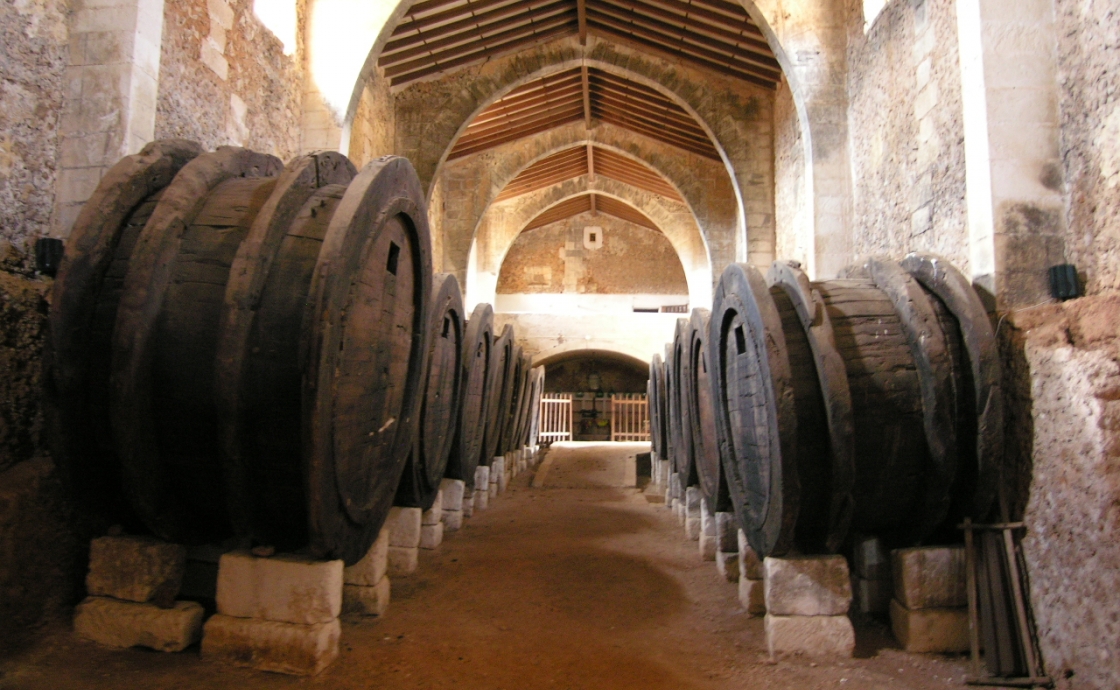
Wine and Wineries in Mallorca: A Journey Through the Island's Interior
Pliny the Elder wrote that Balearic wine was every bit as good as the finest wines of Italy. He said so in the first century, and he meant it: long before Mallorca became synonymous with beaches, it was synonymous with vineyards. That history is still alive less than an hour from Mon Port, inland, where the landscape changes abruptly: the sea disappears and rows of vines appear over reddish earth, alongside almond trees and the distant silhouette of the Serra de Tramuntana.
A route that bypasses the capital
Setting off from Port d'Andratx is best done inland, without heading down to the capital: the road climbs towards Es Capdellà and Galilea, winds through Puigpunyent and gradually opens out onto the Pla de Mallorca, the great central plain where vine-growing has been part of the landscape for centuries. It's a short but characterful drive, one that already hints at what's waiting at the other end.
Two designations, one shared origin
That destination is, above all, two designations of origin. DO Binissalem, the island's oldest, recognised in 1991, is centred on Binissalem, Santa Maria del Camí, Consell, Santa Eugènia and Sencelles. DO Pla i Llevant, younger and more extensive, spreads east, across Felanitx, Manacor, Porreres and eighteen other municipalities. Between the two grow native varieties found nowhere else in the world: Manto Negro, soft and red-fruited; Callet, spiced and pale in colour; and among the whites, Prensal, fresh and citrusy, and Giró Ros, a once near-extinct variety now regaining ground.
Binissalem and Santa Maria del Camí: the must-visit wineries
Binissalem and Santa Maria del Camí are the obvious starting point. Bodegas José L. Ferrer, standing in the centre of Binissalem since 1931, offers guided tours of its historic premises followed by a tasting that usually includes quelitas biscuits, Mallorcan cheese and organic grape jam. A few minutes away, in Santa Maria del Camí, Bodegas Macià Batle carries on a winemaking tradition dating back to 1856, with a walk through the vineyards and a tasting of several wines, bookable in Spanish, English or German. Both visits are best booked in advance, especially in high season.
If the day allows for more: Pla i Llevant
Those with a full day to spare can carry on east into DO Pla i Llevant, where smaller, family-run wineries offer a more artisanal experience, closer to a private discovery than a scheduled visit. It pairs well with lunch in one of the villages of the Pla, where wine is served, as Mallorcan tradition dictates, alongside pa amb oli or a good board of local cured meats.
What lies behind the glass
What makes this excursion worthwhile isn't only what's tasted, but what it reveals about the land itself: why limestone soil and close to three hundred days of sunshine a year give each glass its own character, and why the island had been quietly making wine through the years of mass tourism until a handful of wineries decided to reclaim it, and put their name back on the label.
Back to Mon Port
Returning to Mon Port at the end of the day, the car still carrying the scent of vines and dry earth, is the best way to close the loop: a shower, the pool or a session at the spa before evening falls, and a glass of Manto Negro at dinner, unhurried, to finish understanding why the Romans found it so easy to surrender to this island's wine.